Though I haven’t been writing here much I have still been tracking things that happen, by month, in my journal. As ever some of the things I write down are terribly important, some are silly, but all are things I want to document and remember.
Month by Month
January
– Started working at Slack
– Our heat stopped working and we woke up to a 55 degree house
– Finished “The Bond Project” (meaning B and I watched every single James Bond movie ever made up to that point)
– Finished knitting a scarf for B
– Got a very nice “you’re doing great” message from my new boss that gave me a confidence boost I needed
– Got to meet Rabbi Danya Ruttenberg when she came to Louisville. Her book, Surprised By God, was very influential to me years ago so meeting her was a true joy. She’s a very lovely person.
February
– Met with a friend to discuss serious concerns about another friend’s mental and physical health and wellbeing.
– Visited California for the first time when I went to San Francisco for work. I got to work out of the Slack offices for a few days and attend the company’s first anniversary party. It was very festive.
March
– Bought a new MBP
– Significant (significant for Louisville any way) snow storm
– Felt a little out of touch with my colleagues. Partly due to being remote, partly due to my generally being introverted
– Decided to buy a new car after being a one car family for nearly a year.
April
– Various health and age related issues caused some serious thinking (and maybe a little freakout?) about mortality and aging.
– Seder at The Z’s
– N briefly hospitalized
– Grace turned 14
– Bought a new car
May
– Started writing a Charitable Giving Plan to be more thoughtful and deliberate about charitable donations
– Made plans to go to DC for my birthday
– Grace’s health started declining
– Decided I wasn’t completely happy with Rdio and started comparing streaming services in earnest
June
– We discovered froyo. It was the summer of froyo and toppings.
– Got TSA Precheck. Amazing decision.
– Friend we were concerned about in February confirmed she’s suicidal
– Named a Slack Windows release
– My marriage became legal in all 50 states
July
– Celebrated my birthday in town at an arcade and playing miniature golf with friends
– DC trip which included seeing some of my favorite people, lots of good food and great museum trips
– Confirmed my love of 17th century Dutch landscapes and seascapes
– Led the memorial service for a very lovely person who died much too young
– Found out our house needed a new roof
– Decided to switch to Spotify for music streaming
– Started feeling much more connected to some of my colleagues. They’re my friends now and it’s wonderful.
August
August was awful. I’m crying now as I write about it.
– My grandfather died after a brief illness
– Led the funeral/memorial service for my grandfather
– My beloved dog Grace died
September
– B got a commendation at work
– Holiday celebrations at various friends’ houses
– Adopted a new dog, Scout
October
– Received a very beautiful ring as a 20th anniversary gift from B
– B and I started a new Sunday ritual of bagels, coffee and the New York times and it’s really really lovely
November
– Started taking Scout to doggie daycare sometimes because he needs an outlet to get his energy out while I’m working
– Got new chairs for The Listening Room and they are amazing. It’s now a perfect room to sit in while reading and listening to records
– Emergency dental visit which confirmed I need to have oral surgery
– Met with oral surgeon who lived up to every stereotype you’ve ever heard about surgeons. I found another surgeon to perform my procedure
– Went to the Slack mothership in San Francisco. It was really lovely to be in the office for a few days but it also made me appreciate my remote home-office situation.
December
– Received an internal award at work and it was extremely gratifying and came with an epic illustration of me holding a no beets sign and Scout wearing a Slack coat
– Scheduled my oral surgery
– Fourth night of Hanukkah at the nursing home again
Music Consumption
Since I switched from Rdio to Spotfy halfway through the year and Rdio closed shop at the end of the year my listening statistics aren’t as accurate as they’d been in years past.
However Spotify’s year end wrap up had a mostly accurate overview of my listening habits.
Top Artists
1. Nina Simone
2. Hozier
3. Johann Johannsson
4. Sam Hunt
5. Coldplay
Top Albums
1. Hamilton (Original Broadway Cast Recording)
2. Hozier by Hozier
3. Montevello by Sam Hunt
4. Coming by Leon Bridges
5. Sound & Color by Alabama Shakes
Along with several of my friends I became (and am still) obsessed with the Hamilton soundtrack. It’s amazing and I can’t wait for the day I can see the play in person.
Top Tracks
1. Earned It by The Weekend
2. Show Me Love by Sam Feldt
3. A Sky full of Stars by Coldplay
4. Believe by Mumford and Sons
5. Single for the Summer by Sam Hunt
The track data is a bit skewed because during July and August I drove back and forth to my hometown quite a bit and was in such a funk I just had one driving playlist on repeat each time I went. The tracks that Spotify lists as my “Top Tracks” were all on that playlist.
So with that in mind here are top tracks not based on Spotify data but what songs I remember listening to and remember being important to me:
1. From Eden by Hozier
2. When We Were Young by Adele
3. Both Sides Now (Both Sides Now album version) – Joni Mitchell
4. A Song for You*
5. Here Comes the Sun – Nina Simone
* I have a playlist that consists of nothing but different versions of “A Song for You” and I play it often. Donny Hathaway, Ray Charles, Amy Winehouse and Willie Nelson are all on it.
Movies/TV
Our trend of not going to movie theaters continued. We watched a lot of movies at home but I didn’t keep a list other than all the Bond movies.
We watched a lot of British crime dramas this year. Like all of them I think.
Books
I read 35 books this year, far short of my goal. Of those 35 here are some that I really enjoyed:
Euphoria by Lily King
The Girl with All the Gifts by M.R. Carey
The Dog Stars by Peter Heller
Expats by Chris Pavone
The Snow Child by Eowyn Ivey
Crazy Rich Asians by Kevin Kwan
Technically I read 38 books this year but 3 of them were about dog training so I didn’t count them in the list.
Mourning
My grandfather and my dog died within two weeks of each other. Comparing human loss and canine loss is unfair and difficult and complicated. My grandfather was a good person and had a really wonderful, wicked sense of humor. He had a good life including a 60+ year love story with my grandmother.
I’m very sad that my grandfather died. I was briefly devastated by my dog’s death. For 14 and a half years she had been my constant companion. She’d been with me for so many changes and stages in my life. Life without that dog seemed overwhelming. I depended on her more than I even knew.
As hard as it was on me it was even harder on B. During our initial mourning period we discussed whether or not we’d ever get another dog. The sad quietness of the house led to us deciding yes we would get another dog and sooner rather than later.
Though the timeframe was quick we had gut wrenching discussions about whether we were trying to replace Grace or whether we were ready to love another being the way a companion dog requires being loved.
In the end we adopted Scout. He is as different from Grace in every way possible. Grace was very much a lady. She was a purebred poodle who hated the rain and mud and liked people far more than she liked other dogs. Scout is a boy who is ready for every adventure even if that means sprinting through mud puddles or walking two miles in a torrential downpour. He also really loves other dogs. He likes people ok but to be honest he’s suspicious of most men. After he gives them the once over he’s usually ok with them but god help you if you’re a man and you try to reach over Scout to hug myself or B. He will give you the business with a quickness. He also hates the mailman more than just about anything.
Scout being so different from Grace is a very good thing. We met two poodles who, though they were different colors and sizes, reminded me far too much of Grace. I think it would have broken my heart every day to look at one of those dogs and see so many physical similarities to Grace but not have Grace.
Scout and I have bonded now though we still have a long way to go. We adopted him from a no kill shelter. He had been moved there after a stay in another shelter after he was found roaming the wilderness in Michigan. He was house trained and even knew how to “shake hands” when we got him so clearly he lived with humans at some point. We don’t know whether he was abandoned or ran away and couldn’t get home (he likes to bolt out open doors). We do know he’s suspicious of men and at times cowers like he’s afraid of being hit. So we think he maybe didn’t have the greatest early years (he’s about 3 or 4 now). He has some habits and manners that definitely need improving so we’re working on it, together.
Work
Last year at this time my work with ThinkUp had just come to an end. In last year’s year in review I wrote “Outside of building Menu and Hours, being part of ThinkUp has been the best work experience of my life. “
In what can only be described as the greatest stroke of luck imaginable, my job at Slack has continued my streak of really excellent jobs. I love my job, my company, the product we make and the people I work with. I am truly very fortunate to work there.
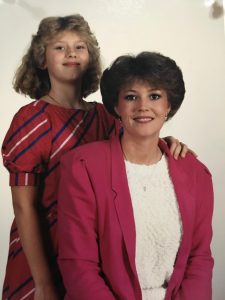 My mother was beautiful. I suspect most daughters think that about their mothers but I’m telling you, objectively, my mother was very beautiful. It’s actually kind of hard to have a beautiful mother. Your awkward and gawky years are even more awkward and gawky when compared to her beauty. But then again you kind of swell with pride when people notice that your mother is beautiful. At least I did, as you can see for yourself.